
Recovering from a heart attack, heart surgery or other cardiac diagnosis can feel overwhelming. Cardiac rehabilitation offers a structured path forward — helping patients rebuild strength, regain confidence and reduce their risk of future heart problems.
Northside Hospital Cardiac Rehab’s Katie McCarthy, E.P., and Emma Daniel-Grogan, CCRP-EP, say the program can be life-changing, yet too few patients take part.
“Only about one in four people participate in cardiac rehab,” McCarthy said. “And that's 25% of people who actually need the program.” She added that participation makes a measurable difference: “Individuals who attend 36 sessions have a 47% lower risk of death and a 31% lower risk of heart attack than those who attend only one session.”
What is cardiac rehab?
Cardiac rehab is a medically supervised program designed to strengthen the heart and improve overall health after a cardiac event.
“We work as a cohesive team to educate our patients and to help our patients through the exercise program,” McCarthy explained. “The goal is to improve cardiac health and prevent a future heart event.”
The program typically includes three phases. Phase one begins in the hospital with education. Phase two is the main outpatient program, usually consisting of 36 monitored exercise sessions over about three months. Phase three is a maintenance program focused on sustaining healthy habits over the long term.
Daniel-Grogan said many patients qualify. “There’s a very wide variety of people who come to and benefit from cardiac rehab,” she said. “It does have such a benefit on overall longevity and quality of life.”
What happens during a cardiac rehab session?
Exercise therapy is the foundation of cardiac rehab.
“Our entire format is based around exercise because we know that exercise has so many benefits for the heart and just overall bodily health,” Daniel-Grogan said.
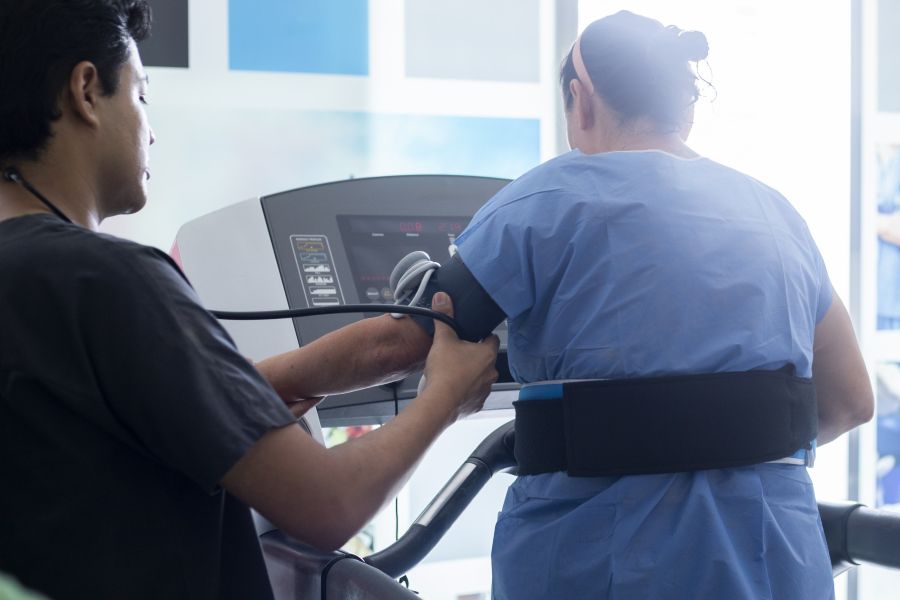
A typical session lasts about an hour. Patients begin by checking vital signs and connecting to a heart monitor to ensure safety during exercise.
“That just shows us a part of their heart so that we can make sure everything’s looking all right while they’re exercising,” McCarthy said.
Patients then complete personalized aerobic exercise using equipment such as treadmills, recumbent bikes, rowing machines or steppers. Strength training is also included regularly.
“We will do strength training twice a week,” McCarthy added. “We use resistance bands … dumbbells, and sometimes we just do body weight exercises.”
Sessions also include stretching, education and goal setting. Patients receive individualized home exercise plans and ongoing support from their care team.
Why exercise is so important for heart recovery
Exercise provides wide-ranging benefits for heart health and overall wellness.
“Exercise can help strengthen the heart and lungs themselves,” Daniel-Grogan said. It also helps “reduce fat mass, increase lean mass, and overall improve a lot of your cardiovascular risk factors.”
Regular exercise can lower blood pressure, improve cholesterol levels, enhance insulin sensitivity, improve sleep and reduce stress.
Beyond the physical benefits, exercise helps patients rebuild confidence.
“It builds up a lot of confidence,” Daniel-Grogan added. “People coming in here being like, ‘I don’t think I can do this,’ and then on the last session doing that times five.”
Building lifelong heart-healthy habits
Cardiac rehab is about more than short-term recovery. It helps patients make lasting lifestyle changes to protect their hearts.
“This is a lifestyle modification,” McCarthy said. “Our goal is that you take it with you.”
Patients often arrive with simple but meaningful goals.
“We always ask them, what is your main goal for the program?” she said. “We’ll get answers all the way from losing weight all the way to just feeling, ‘I just want to feel like myself again.’”
Through supervised exercise, education and support, cardiac rehab helps patients heal — and move forward with strength and confidence.
LEARN MORE ABOUT CARDIAC REHAB AT NORTHSIDE.
