
Breast cancer affects millions of women, and the numbers remain significant. In 2026, the American Cancer Society estimated about 321,910 new cases of invasive breast cancer in the United States. women, along with 60,730 cases of ductal carcinoma in situ. The lifetime risk remains roughly 13%, or a 1‑in‑8 chance of developing the disease. Nutrition plays an important role in overall health, and research continues to show connections between diet patterns and breast cancer risk.
Links between diet and breast cancer
Studies have identified several nutrition-related factors that may affect breast cancer risk:
- High-fat diets have been associated with increased breast cancer risk.
- Postmenopausal breast cancer survivors with the highest vegetable intake have shown significantly lower recurrence rates.
- Women consuming more than 25 grams of fiber daily have demonstrated reduced breast cancer risk.
- An estimated portion of cancer cases, influenced by excess body weight, alcohol use, low physical activity, and poor diet, continues to contribute to the overall cancer burden.
Because of these findings, the American Institute for Cancer Research (AICR) recommends a diet centered on plant foods as part of a risk-reduction strategy. They developed the “New American Plate” model, which encourages filling two-thirds of the plate with plant-based foods for optimal balance and prevention support.
What plant foods are and why they matter
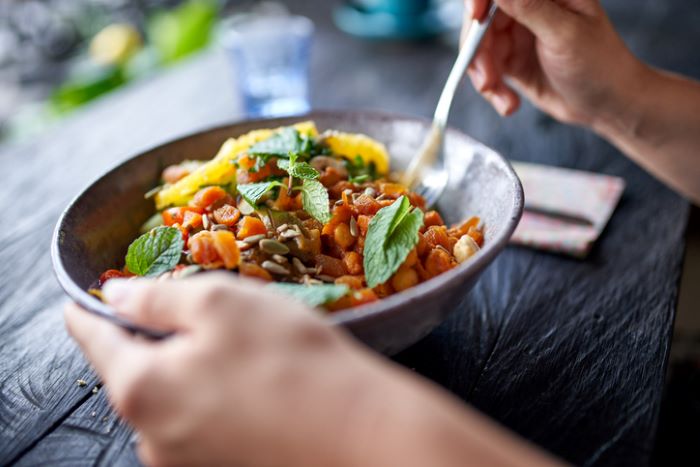
When AICR refers to plant foods, they mean minimally processed options such as fruits, vegetables, whole grains and legumes. These foods supply dietary fiber, which supports gut and bowel health, promotes satiety and contributes to cancer risk reduction.
Plant foods also contain phytonutrients. These are natural compounds responsible for a plant’s aroma, color and flavor. Each phytonutrient type provides different benefits, from reducing inflammation to supporting healthy cell function.
Simple ways to add more plant foods
Incorporating plant foods into your everyday routine does not have to be complicated. Try the following:
- Aim for at least five servings of fruits and vegetables per day by including them at every meal and snack.
- Choose whole grains for at least half your grain intake; for example, select whole grain bread or swap white rice for quinoa.
- Add nuts and seeds for texture by sprinkling them over salads, yogurt or smoothies.
- Plan a few meatless meals each week using beans, lentils or soy-based proteins.
- Season foods with herbs and spices instead of salt for added flavor and extra phytonutrients.
These strategies support both survivors and individuals seeking to lower their breast cancer risk through nutrition.
LEARN MORE ABOUT NORTHSIDE HOSPITAL CANCER INSTITUTE.

References:
- American Cancer Society. How Common Is Breast Cancer? 2026. https://www.cancer.org/cancer/types/breast-cancer/about/how-common-is-breast-cancer.html.
- Sieri, S.K., et al. “Dietary Fat and Breast Cancer Risk in the European Prospective Investigation into Cancer and Nutrition.” American Journal of Clinical Nutrition 88, no. 5 (2008).
- McEligot, A., et al. “Dietary Fat, Fiber, Vegetable, and Micronutrients Are Associated with Overall Survival in Postmenopausal Women Diagnosed with Breast Cancer.” Nutrition and Cancer 55, no. 2 (2006).
- Aune, D., et al. “Dietary Fiber and Breast Cancer Risk: A Systematic Review and Meta‑Analysis of Prospective Studies.” Annals of Oncology 23, no. 6 (2012).
- American Cancer Society. Healthy Eating and Active Living Research Highlights. Accessed August 3, 2023.
- American Institute for Cancer Research. “What Is a Plant-Based Diet? AICR’s Take.” 2019.
- If you’d like, I can also provide SEO keywords, meta descriptions, or a social media summary.