
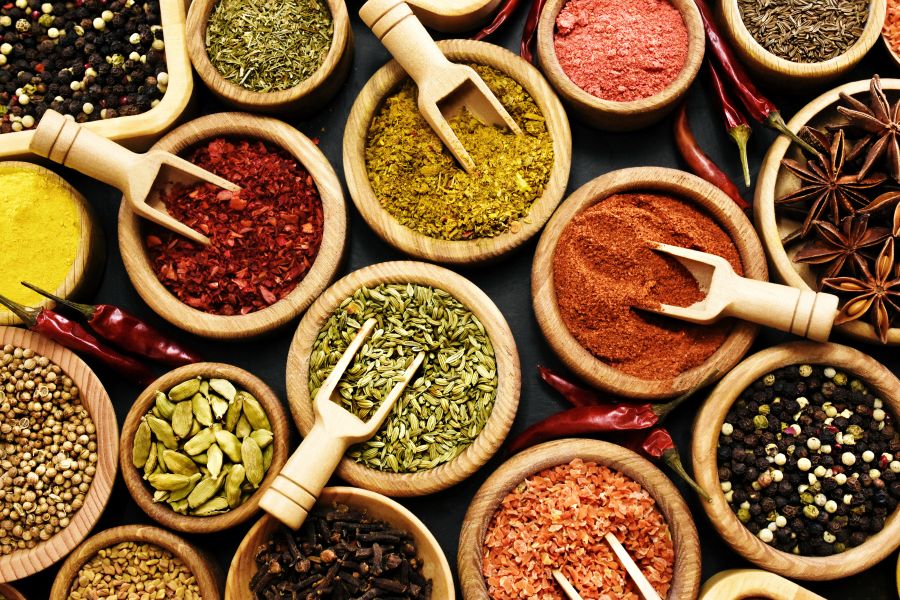
Herbs and spices add flavor, color and aroma to foods and contain natural compounds that may help support overall health.
Turmeric
Turmeric is a vibrant yellow spice that contains curcumin, a naturally occurring compound associated with antioxidant and anti-inflammatory activity.
Potential benefits: Exhibits anti-inflammatory, antioxidant, antimicrobial and antiparasitic properties. Traditionally associated with support for metabolic health, cardiovascular function, digestive comfort and glycemic control. Historically used for its antiseptic qualities and as support in inflammatory and rheumatic conditions.
Try it: Add to soups, stews, rice or lentils; incorporate into eggs or roasted vegetables; pair with black pepper to enhance absorption; use in smoothies or warm milk.
Ginger
Ginger has a long history of traditional use, particularly for digestive support.
Potential benefits: Research supports its effectiveness for pregnancy-related nausea, motion sickness, postsurgical discomfort and chemotherapy-related nausea (with medical guidance).
Try it: Add fresh or ground ginger to soups, stir-fries, smoothies and baked goods; steep fresh slices for tea; incorporate into marinades and dressings.
Cumin
Cumin is a versatile, earthy spice used globally to add warm, smoky and savory depth to dishes, particularly in Indian, Mexican and Mediterranean cuisines.
Potential benefits: Traditionally used to support metabolism and provide antioxidant compounds.
Try it: Add to beans, chili, soups and stews; use in spice blends; sprinkle into grains or lentils; toast briefly to enhance flavor.
Garlic
Garlic has been used for centuries in both culinary and traditional wellness practices.
Potential benefits: Garlic is linked to improved blood vessel flexibility and lower cholesterol and triglyceride levels. It is a staple of the Mediterranean diet, an eating pattern often recommended for heart health.
Try it: Add fresh garlic to sauces, soups and vegetables; roast whole cloves for a milder flavor; mix into marinades and dressings; add near the end of cooking for optimal flavor.
Cayenne
Cayenne is a chili pepper containing capsaicin, which contributes to its heat.
Potential benefits: Possibly effective in treating back pain, cluster headache, fibromyalgia, seasonal allergies and prurigo nodularis (a skin disease).
Try it: Use small amounts in soups, stews, sauces or chili; sprinkle lightly on vegetables or popcorn.
Clove
Clove is a fragrant spice used in both sweet and savory dishes.
Potential benefits: May provide antioxidant support, act as a free radical scavenger, metal chelator, anti-inflammatory, anticarcinogenic, inhibit LDL oxidation, antimicrobial and hepatoprotective.
Try it: Add to baked goods and warm beverages; use whole cloves in soups or stews and remove before serving; pairs well with cinnamon and nutmeg.
Cinnamon
Cinnamon is a spice made from the bark of cinnamon trees. The most common type sold in North America is cassia cinnamon, while Ceylon cinnamon is known as “true” cinnamon.
Potential benefits: May help support blood sugar control and heart health while adding natural sweetness without sugar.
Try it: Sprinkle on yogurt, fruit or oatmeal; blend into smoothies; or add to stews, chili and meat rubs.
Nutmeg
Nutmeg is derived from the seed of the Myristica fragrans tree.
Potential benefits: Nutmeg contains lipid-soluble compounds, including terpenes, phenylpropanoids, fatty acids and sterols, that support antioxidant activity and help reduce oxidative stress. It should be used only in typical culinary amounts, as excessive consumption may be toxic and cause serious adverse effects.
Try it: Commonly used in beverages such as hot chocolate, lattes, eggnog and cider; pairs well with cinnamon and cloves in baked goods; freshly grated nutmeg enhances both sweet and savory dishes, including béchamel sauce, meats and poultry, when used sparingly.
Key takeaway
Spices are a practical and flavorful way to enhance meals and support overall health when used consistently within a balanced eating pattern. Individuals taking medications or managing specific health conditions should consult a health care provider or registered dietitian before taking any of the herbs and spices as a supplement.
Recipe for Anti-Inflammatory Spice Mix
- 6 tablespoons ground dried turmeric
- 3 tablespoons ground coriander
- 3 tablespoons ground cumin
- 2 tablespoons ground dried ginger
- 1 tablespoon ground black pepper
Instructions: Blend all together, then store in an airtight glass jar for use. You can use with roasted chicken, shrimp or roasted vegetables. Adapted from nourishedandempowered.com.
LEARN MORE ABOUT NORTHSIDE HOSPITAL NUTRITION SERVICES.
References
- Journal of Functional Foods. (2015). Volume 18, Part B, 811-819.
- Food Research International. (2025). Volume 218, 116798.
- Eatright.org: https://www.eatright.org
- Johns Hopkins Medicine: https://www.hopkinsmedicine.org