
You’ve come to the right place for one of the best cancer treatment centers for lymphoma. Patients have access to leading-edge treatments and personal support from a team of specialists dedicated to your well-being.
At Northside, you’re never alone in the fight against lymphoma. Our experienced team of specialists attends to your individual needs, upon diagnosis and continuing through treatment, survivorship - and on to wellness.
Our lymphoma team includes experts in hematology, specifically blood and marrow transplant, CAR T-cell therapy, pathology, medical and radiation oncology.
Other Northside Hospital Cancer Institute benefits include:
Lymphoma is a blood cancer that starts in white blood cells called lymphocytes.
Lymphocytes are a part of your immune system, and they travel through your body to fight infection. They can be found in your lymph nodes, spleen, thymus, bone marrow and other parts of the body.
There are two main types of lymphoma: Non-Hodgkin’s and Hodgkin’s.
Lymphoma symptoms often are similar to those of a cold, the flu or a respiratory infection — only they don’t go away. They commonly include:
Doctors don’t know the exact cause of lymphoma, and the risk factors vary depending on the type of lymphoma. However, in general, some risk factors include:
There are no screening tests to detect lymphoma. In many cases, people go to the doctor because they feel like they have a cold or the flu. However, the doctor might suspect lymphoma upon seeing and feeling swollen lymph nodes during a physical exam.
If lymphoma is suspected, the next steps to diagnose it might include:
At Northside, lymphoma cancer treatment plans are carefully designed to meet your personal needs and address your specific type of lymphoma. Complete care and comprehensive support makes Northside one of the best cancer treatment centers for lymphoma.
Sometimes lymphoma grows so slowly that the best option is to watch it closely. Other times, your doctor will recommend chemotherapy, targeted therapy drugs, radiation therapy, stem cell transplant and immunotherapy, or a combination to kill the cancer cells.
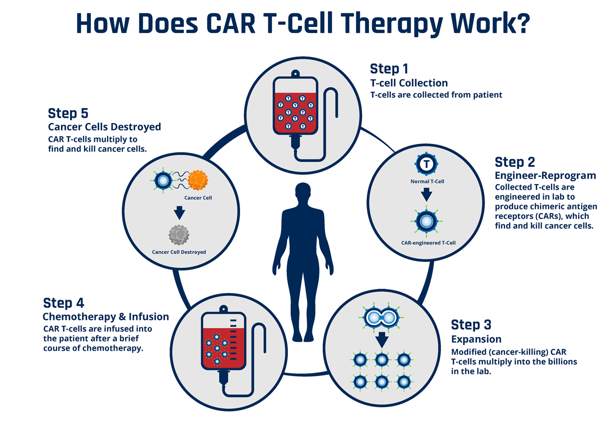
The Northside Hospital Cancer Institute’s world-class Immunotherapy Program also offers chimeric antigen receptor (CAR) T-cell and targeted immunotherapy treatments to treat certain types of non-Hodgkin’s lymphoma. CAR T-cell therapy, removes some of your own immune cells and genetically modifies these cells to fight cancer better, and then put back into your body to attack the cancer.
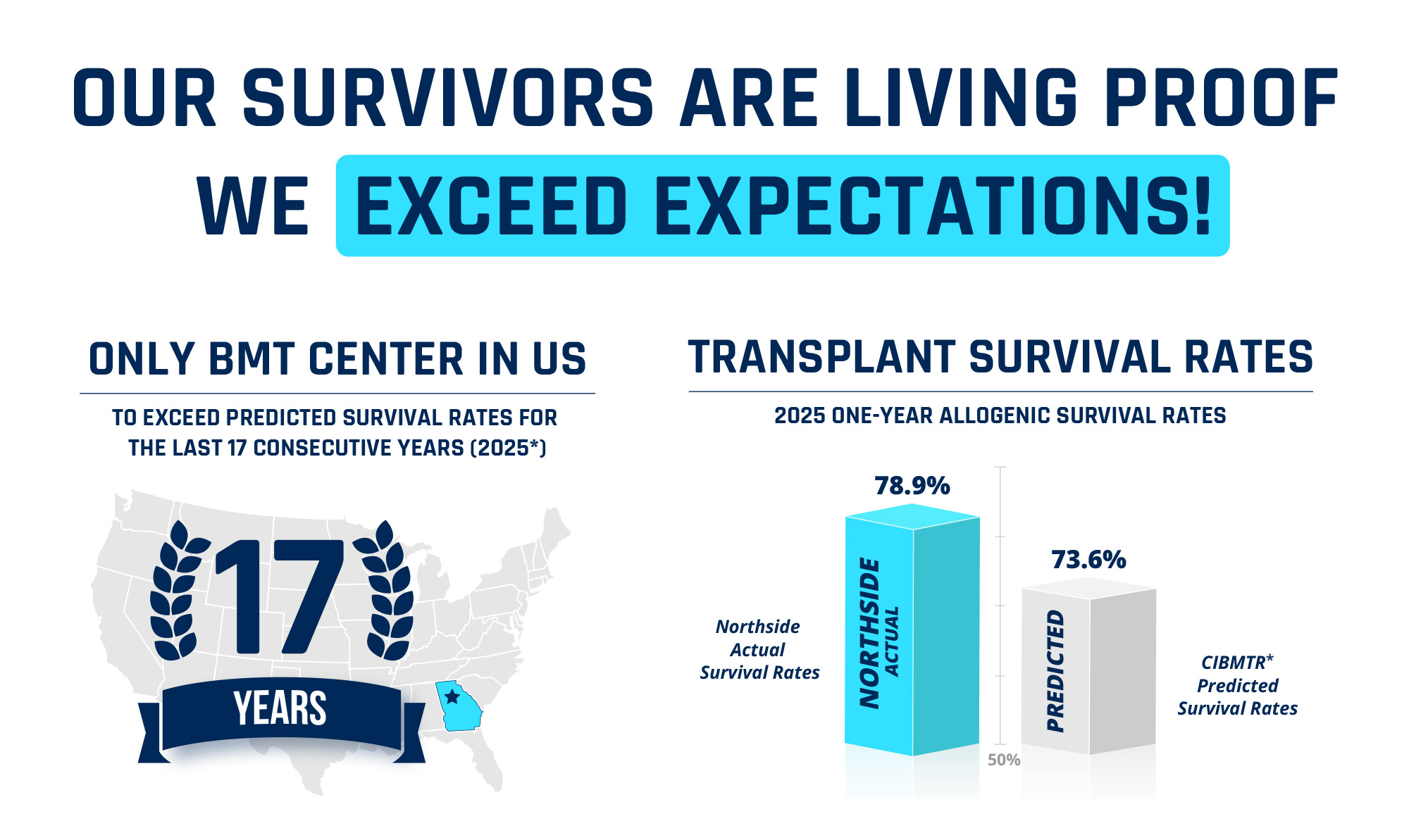
For some forms of lymphoma, a bone marrow transplant may be recommended. The Blood and Marrow Transplant (BMT) Program at Northside Hospital Cancer Institute is one of the largest and most comprehensive programs of its kind in the Southeast. Our Program has some of the best survival rates in the nation.
Northside participates in clinical trials for CAR T-cell and targeted immunotherapy treatments, which may be a an option for patients with non-Hodgkin’s lymphoma. Our Research Program has access to state-of-the-art clinical research trials, so patients can have the most current therapies available close to home.
Ongoing support is crucial when facing cancer and afterward. Northside Hospital Cancer Institute provides a full range of Support and Survivorship programs and services to address the unique needs of lymphoma cancer patients.
LEARN MORE ABOUT ALL OF OUR NHCI SUPPORT & SURVIVORSHIP SERVICES